50 Top Luxury Real Estate Markets in the USA: Carmel, CA

Actor-director Clint Eastwood once was the mayor of Carmel. Edward Weston and Ansel Adams, two of the most innovative and influential 20th century American photographers lived here. Each of these men are considered true masters in their own right and faithfully represent the rich artistic history that is at the core of Carmel-by the Sea, the center point of  California’s North Central Coast.

Over the years, the natural beauty of the area has inspired poets, writers, painters, and architects alike. Mike Canning, who represents Carmel's legendary Butterfly House, says, “It is one of only 5 true oceanfront properties in Carmel.  The home, designed by Frank Wynkoop, is anchored directly into the rocky shoreline and has panoramic views from Point Lobos to Pebble Beach. Captivating Carmel residents and tourists for decades, this oceanfront architectural landmark exceeds unique”.

Luxury Real Estate Marketing: Serving the Ready Minded Consumer

In our previous post, we discussed ease of use for the consumers as one of the important keys to enhance your web site.  Once the ready minded consumer contacts you, what is your response time? Availability and response time go hand in hand.  If both are not in harmony, the consumer will go on to another site.   According to Gary Beerman, vice president of Alert Site, “The Industry standard is that a brand’s website has to load within four seconds, or the probability that the consumers will leave the page is quite high.”

If the response time is more than 5 minutes, the probability that the consumer will leave the site and go to a competitor’s site is also high.  According to a survey generated by Lead Response Management.org

When a lead is contacted in 5 minutes versus 30 minutes, it will produce a significant increase in qualified leads that have the potential of closing.

The best time to call to qualify a lead is mid to late morning (not before lunch) and late afternoon (4-5PM is best 5PM-6PM is OK).  The best days to follow up/qualify are on Wednesday and Thursday. The worst days are Monday and Tuesday.  Friday is good to make contact, but not to qualify.

It is a good idea on your web contact form to have a form which asks the prospect their communication preference, i.e., email, text, or phone.  Asking that question ensures the beginning of a fruitful relationship.

WATCH VIDEOS-

Buzz-Worthy Luxury Real Estate Websites 

Personal Branding Case Studies   Company Branding Case Studies 

About Language of Luxury

- JOIN THE LOL COMMUNTIY - 

 GET FLUENT. GET AFFLUENT! 

 Linked In, FacebookActive Rain

Follow Us on Twitter: LuxuryMarketing

Luxury Real Estate Marketing: The Evolution of Web Sites & the Consumers Who Use Them

As a luxury real estate marketing professional, it is important to continue to meet the current needs of potential clients on your web site.  Luxury real estate sites need to evolve as consumers become more web-savvy, clearer about what they are looking for and more time-starved. 

Consumers now expect to instantly find what they came for and also be able to control the speed at which they consume the information they find.  “Flash” sites and rich media sites are a thing of the past.  They can be a turn-off or a distraction for the “ready-minded” person.

For example, watching a slide show or a video about a particular listing presents the information at the speed you set which is not necessarily their speed.  A slide show with thumbnails that they can click on, touch to view (on a touch screen) or hover-over at their own pace is now preferred.

Luxury real estate websites should be easy to navigate and facilitate immediate access to information in a self-serve environment.  The MLS can be viewed from a multitude of sites.  Property search is a commodity and it is free.  The days of having someone register to view properties are over unless you offer an extraordinary promise of value that cannot be found on your competitors’ sites. 

Less is more!  Pare down unnecessary information. Luxury buyers do not want to access properties in all the neighborhoods in a given marketplace.  They most likely are interested in the luxury areas only. Therefore, augment custom search functionality with pre-set search queries based on anticipated criteria, such as property type, location, and price range.  This offers them the luxury of time and makes it easy to get what they want which is an added value.

Less is more in design as well. Keep it simple and elegant. Think of website design as a map to guide your viewer’s eyes to what they want to see.  Your sellers want to see their properties displayed elegantly.  Your buyers want to see your listings as well as the rest of the relevant inventory in your marketplace.  Present the canned information (schools, demographics, etc) stylishly.  Do not take the easy way out and just give them a links to other sites. 

Today’s luxury real estate consumer expects to find original content in addition to commoditized information that most likely can be found on all of your competitor’s websites.  Blogs offer the vehicle to present original information from the author’s point of view.  Yet, very, very few luxury real estate marketing professionals properly maximize this opportunity to connect with web-savvy consumers.  If you offer truly original content, consumers will actually slow down and take the time to appreciate your unique slant because doing so is a luxury.

WATCH VIDEOS-

Buzz-Worthy Luxury Real Estate Websites 

Personal Branding Case Studies   Company Branding Case Studies 

About Language of Luxury

- JOIN THE LOL COMMUNTIY - 

 GET FLUENT. GET AFFLUENT! 

 Linked In, FacebookActive Rain

Follow Us on Twitter: LuxuryMarketing
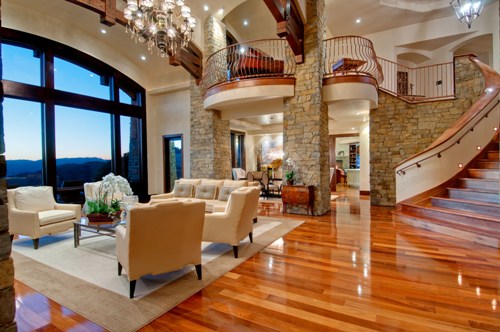
Luxury Real Estate Marketing: The New Frontier/Original Content Marketing

Another leading trend  in the affluent sector that impacts luxury real estate marketing is the growing technology IQ of the affluent consumer.   The affluent consumer has become tech savvy, and understands the value of the internet as a source of original knowledge and up to date information.   

One of the most effective ways of marketing yourself on line as a luxury real estate marketing professional is to blog.  The old paradigm for blogging was to write posts that are laden with keywords interspersed with some relevant content, all for the purpose of extracting “Google Juice”. It also encouraged reposting the same post and changing a few words here and there. This type of blog (beloved by the Google robots) could definitely get that for you and may even catapult you to the coveted #1 position.  It will not build an audience of raving fans, which is the primary purpose of blogging. In fact it is a turn off, and it works against you.  No one wants to be treated like a robot.

 What today’s luxury consumer is looking for in blog posts is consistent, original valuable information, making them savvier about your marketplace.  They are looking for “insiders” insights, the newest and latest information.  A post that reviews a book written by a local resident as well as an invitation to a reading by the author would be an example of content marketing (pull marketing).  This type of engagement creates subscribers, grows audiences, referrals and a call to you from a potential buyer/seller. 

WATCH VIDEOS-

Buzz-Worthy Luxury Real Estate Websites 

Personal Branding Case Studies   Company Branding Case Studies 

About Language of Luxury

- JOIN THE LOL COMMUNTIY - 

 GET FLUENT. GET AFFLUENT! 

 Linked In, FacebookActive Rain

Follow Us on Twitter: LuxuryMarketing

Luxury Real Estate Marketing: Redefining Luxury in 2012

One of the leading trends in the affluent sector that impacts luxury real estate marketing is the change in how the affluent define luxury.  The affluent are becoming “value masters”, the new badge of smart consumers.  The annual Ipsos Mendelsohn Affluent Survey (by Ad Age) is a nationally representative behavioral study of more than 14,000 adults living in households with at least $100,000 in annual household income.

Value Matters
89% responded “When I decide to purchase a luxury item, I go out of my way to find the best price possible.”
60% responded “Even though the recession is 'officially' over, I am still spending money much more cautiously than I used to.”
 
Quality
78% responded "When it comes to quality, I believe you get what you pay for."
18% responded "I tend to buy based on price, not quality."
 
Online
68% responded "When I go shopping online, I usually know exactly what I want to buy."
64% responded "I regularly read online reviews of products before making an online purchase."
 
Offline
63% responded "When I go shopping in a retail store, I usually know exactly what I want to buy."
47% responded "I regularly read online reviews of products before making a purchase in a retail store."

In buying a luxury home whether as a primary or secondary residence, the new affluent buyer is researching the market place.  With value as the objective rather than the old paradigm of “being able to afford anything I want”, the premium of perceived value (i.e., buying on the “right” street or the “right” neighborhood) does not have the same importance as it once did.   They are also willing to wait for price reductions.    Given the new shift in psycho graphics in the affluent marketplace, how will you adapt as a luxury real estate marketing professional?

WATCH VIDEOS-

Buzz-Worthy Luxury Real Estate Websites 

Personal Branding Case Studies   Company Branding Case Studies 

About Language of Luxury

- JOIN THE LOL COMMUNTIY - 

 GET FLUENT. GET AFFLUENT! 

 Linked In, FacebookActive Rain

Follow Us on Twitter: LuxuryMarketing

Luxury Real Estate Marketing: The Difference between a Trademark and a “Trustmark”

From a branding standpoint, there is a huge difference between a trademark and a “Trustmark”.  If market leadership is your quest, this distinction is of paramount importance. 

Trust is the expectation that promises will be kept. Trust is earned by the demonstration of kept promises.  In the context of market leadership trust is the consistent delivery of an extraordinary promise of value that results in achieving top-of-mind status in a given product or service category (or a niche within a category).

Obtaining a trademark is relatively easy.  But, it takes the constant, steady, unswerving delivery of your unique value proposition to build a dependable, reliable name for yourself or your company, a brand that your target market can trust over time.   Only when your reputation becomes highly regarded on a consistent basis does your trademark transform into a “Trustmark”.

In the realm of luxury brands there is a full spectrum of highly regarded Trustmarks that range in categories from small indulgences to extravagant products and services.  See’s Candies, an example of a small indulgence, is a market leading company that has consistently earned the trust of millions of people for over 90 years.  Every time you purchase candy at See’s you get a free sample and the quality is always a constant.

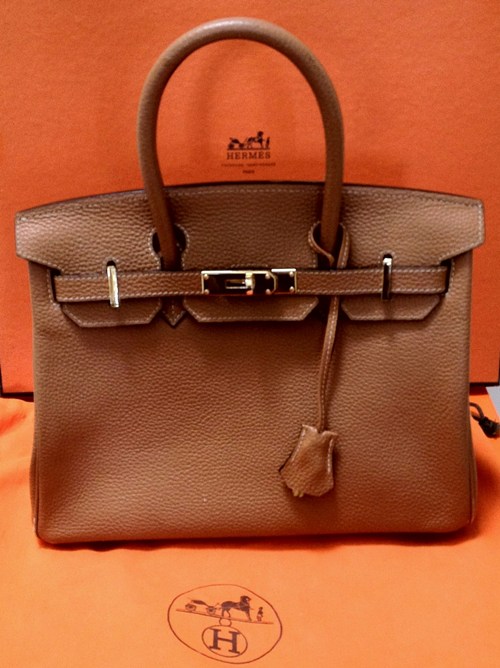
Hermès has been a trusted name in high-fashion, perfume and lifestyle accessories since 1837 and enjoys an impeccable reputation for standing behind their products.  A young woman recently brought in a saddle to a local Hermès store that needed its stitching repaired.  Although, the saddle was purchased decades ago by her grandmother, Hermès repaired it at no charge.  Stories like this one exemplify the level of legendary service that can always be expected at Hermès.  And, that is what makes the difference between a trademark and a Trustmark.

As a luxury real estate marketing professional in pursuit of gaining or sustaining market leadership, building a personal or company brand that becomes a Trustmark vs. a trademark should be one of your primary goals.  How can you develop a reputation for legendary service and consistently deliver on your extraordinary promise of value?

WATCH VIDEOS-

Buzz-Worthy Luxury Real Estate Websites 

Personal Branding Case Studies   Company Branding Case Studies 

About Language of Luxury

- JOIN THE LOL COMMUNTIY - 

 GET FLUENT. GET AFFLUENT! 

 Linked In, FacebookActive Rain

Follow Us on Twitter: LuxuryMarketing

50 Top Luxury Real Estate Markets in the USA: Aspen, Colorado

 Aspen, Colorado has long been considered a world class ski resort that attracts wealthy and famous visitors who seek the Rocky Mountain high life. Yet, the Aspen lifestyle, as described by locals, evokes a deeper, richer story, a story centered on a very strong sense of community that began in the late 1800’s when it was known as the most productive silver-mining district in the United States.

 Today Aspen has evolved into a “learning community” and a cultural mecca. It is a place to fill the senses, to commune with nature, to exercise your body and to give your brain cells a workout as well. According to Brian Hazen, “Aspen is a community that has the amenities of a world class resort.  It is not a resort that is seeking to be a community”.

Luxury Real Estate Marketing: Creating Customers for Life


A consumer’s first impression of a company or luxury real estate marketing professional is of paramount importance. If you manage to make an indelible positive first impression, your next challenge is to be consistent with every subsequent encounter over time. That is if you want to have a customer for life. Here are a couple examples that illustrate this point.

Recently, we needed to get in touch with the manager of a branch office of one of the major luxury real estate brands in the USA, in a very high profile (and competitive) marketplace. But, we did not know the manager’s name. We placed a call to the office and encountered a voicemail that had one option: “If you now the extension of the person you are trying to reach, you may dial it now. For the company directory, press #”. 

Since we did not even know the name of the manager, we intuited pressing “O” and got another recording.  This time we were prompted to leave a message with the promise of a returned phone call.  However, we had to wait and listen to a lengthy message before we heard the sound of the “beep”.  We had to endure several completely irrelevant questions to the purpose of our call, like, “if you need our address, the address is …” Does this sound familiar?

What if we were consumers who were contemplating giving the listing of our $5 million dollar estate to an agent in this office, and we wanted to ask the manager which agent would be most appropriate for our needs? In a matter of 90 seconds of our life that were utterly wasted on this call, that company would be crossed off our list. That recording would have cost that company potentially $250,000 (with a 5% commission)!

On the complete other end of the spectrum we recently had lunch our favorite Italian restaurant in Santa Monica, California that made a lasting first impression over 27years ago, and has been impeccably consistent at making remarkable impressions each and every time we return there.  Il Forno has fabulous food, outstanding service and a wonderful wine cellar. If feels like “coming home” to our extended family when we dine there.

Il Forno was founded by Joseph Suceveanu in 1985.  The Chef, Domenico Salvatore has also been a part of Il Forno since the same year. In addition to Santa Monica, Il Forno can also be found in three different locations in Japan: two in Tokyo, and one in Fukuoka.  When they opened in Japan, Il Forno was immediately considered to be one of the top Italian restaurants in the country.

Great first impressions need to be made upon first encounters. But, every single subsequent encounter must be great to create a customer for life.

WATCH VIDEOS-

Buzz-Worthy Luxury Real Estate Websites 

Personal Branding Case Studies   Company Branding Case Studies 

About Language of Luxury

- JOIN THE LOL COMMUNTIY - 

 GET FLUENT. GET AFFLUENT! 

 Linked In, FacebookActive Rain

Follow Us on Twitter: LuxuryMarketing

Personal & Company Branding: The Benefits of a Single-Word Brand Name

STING & SEAL ©Aleksandar Andjic - © Semisatch

Choosing the right name for your personal or company brand can help you achieve a strong competitive advantage. One brand strategy that can help you to reach top-of-mind status in your marketplace, as a luxury real estate marketing professional, is to distill your brand identity to a single word.  

Many celebrities have been successful at doing this, including Oprah, Cher, Madonna, Beyoncé, Rihanna, Daughtry, and of course, the Donald.  We are not suggesting that you must change your name or the name of your company to a single word.  But, the one-name brand reveals three important branding principles that are definitely worth understanding and applying. 

  1.  SHORT NAMES ARE EASIER TO REMEMBER:  A one-name brand makes it very easy for your target market to remember you. Therefore, when you chose or change your brand name keep this principle in mind: Make it as easy as possible for your target market to remember you after their first encounter with your name.
  2.  SINGLE-WORD BRAND NAMES ARE INIMITABLE: Once you stake claim to your single word as your brand name, it makes it difficult for someone else in your marketplace to copy you if they want to stand out
  3. CONVERTING A COMMON NOUN INTO A PROPER NAME COMMANDS INSTANT ATTENTION: If your one-word brand can be converted from a common noun to a proper name it can immediately grab the attention of your target market.  

A name like Sting or Seal simply cannot be ignored because it is such a departure from the norm.  You hear the name once and it sticks in your mind. 

Both Sting and Seal were born in England. Sting’s original name was Gordon Matthew Thomas Sumner. Seal was born Seal Henry Olusegun Olumide Adeola SamuelIt.  Both had the good sense to condense their names to a single syllable. If you can do the same, you could have a distinct competitive advantage in your luxury real estate marketplace.

WATCH VIDEOS-

Buzz-Worthy Luxury Real Estate Websites 

Personal Branding Case Studies   Company Branding Case Studies 

About Language of Luxury

- JOIN THE LOL COMMUNTIY - 

 GET FLUENT. GET AFFLUENT! 

 Linked In, FacebookActive Rain

Follow Us on Twitter: LuxuryMarketing
50 Top Luxury Real Estate Markets in the USA: Hawaii - Part 4

Maui - The Valley Isle

Sure, Oprah and many other celebs own homes here.  But, top celebrity status on Maui belongs to Laird Hamilton, often referred to as the “greatest big wave surfer to have lived”.  He is also credited for igniting the popularity of stand up paddling (SUP), a sport that Hamilton says is a return to the traditional Hawaiian way of surfing, as practiced by King Kamehameha almost three hundred years ago.

The wind, the sea and year-round ideal weather provides the perfect storm for water sport enthusiasts on Maui.  According to Billy Jalbert, who specializes in selling homes on the North Shore, “this area is one of the premiere wave sport destinations in the world because of the warm water and the high winds that funnel through the twin mountain peaks”.   In fact, “Maui has been named the windsurfing capital of the world”, according to real estate broker and former windsurfing world speed record holder, Fred Haywood . Fred was the first windsurfer over 30 knots, “an unbelievable barrier in 1983”, he said.

Making the Non-obvious, Obvious: The Role of a Brand Strategist

A brand is the highly focused, abbreviated communication that conveys the essence of what makes you or your company different from and better than your closest competition.  It is the distillation of your extraordinary promise of value expressed graphically and in the fewest words possible so that your target market can quickly grasp that you are a match for them.  People like to do business with people like themselves, people they feel they can trust. Therefore, a successful brand accelerates the speed of trust and empowers potential referral sources to easily spread the word about YOU.

In our Language of Luxury blog we often offer examples of non-real estate related products and services that clearly illustrate these branding principles.  And, we often are asked how this applies to luxury real estate personal and company branding.  The fact that this is not obvious is what prompted this post.  The principles of excellent branding and brand strategy are the same for all products and services. And, the role of the brand strategist is to make the non-obvious, obvious.

A strong brand makes what is implicit about you or your company, explicit, and does so with an economy of imagery and words.   A great brand is like a flawlessly cut diamond that allows the maximum refraction of light. All of the individual facets of a great brand work together to communicate a singular message that creates demand and compels action to buy products or engage service professionals. 

The role of a brand strategist is similar to a diamond cutter who knows exactly how to take a diamond in the rough and bring out its utmost brilliance, which is not obvious to the untrained eye.  What is truly unique and valuable about you or your company may not even be obvious to YOU.  It is often the case that the precise definition of your ideal client is also not obvious to you. These factors must be discovered and articulated first.  Only then can you develop a successful brand strategy.

Our case study of Cuties, a brand of California Clementine oranges, illustrates what can happen, from a strategic standpoint, once you fully articulate your unique promise of value and sharply define your target market. They were able to exponentially expand their target market by accentuating and amplifying their distinguishing value proposition. Cuties now targets BOTH parents and kids as their ideal customers because their fruit is not just sweet and seedless like naval oranges, for example. Cuties are small which means they are easier to handle for kids. And, they are easier to peel for small children than other oranges.

Expanding the target market to include kids as a brand strategy was the non-obvious made obvious. The unique combination of Cuties' features lent itself to a flawless brand strategy that cannot readily be imitated, a strategy that is also expressed in the brand's kid-friendly personality.Cuties now "owns" the brand position and the very concept of "kid-friendly orange", a whole new, uncontested sub-category of oranges that they identified, claimed and now dominate.

The ultimate triumph of a brand strategist is to enable a brand to "own" a single word or brief phrase, in the minds of their target market, within a given product or service category. To illustruate this point, Volvo owns the word "safety", FedEx owns "overnight" and Xerox owns "paper copies".

There is a tremendous amount of focus that goes into crafting a strong brand and also into developing a powerful brand strategy.  But, it is an exercise in futility if the aim of branding is not fully understood.  The purpose of brand strategy is to achieve top-of-mind status and secure the lion’s share of the business.  Brand strategy ONLY applies to what we call the “unabashed pursuit of market leadership”.  If you are not interested in being #1 or #2 in your marketplace or a niche therein the purpose of brand strategy simply will not be obvious to you.   

Please understand this:  Making a good living in marketing luxury real estate does not require being a market leader.  But, gaining or sustaining market leadership, if that is your choice, requires expert brand strategy. 

At Napa Consultants, International, we make gaining and sustaining market leadership through brand strategy accessible to small business owners and local service professionals. As brand strategists in the realm of marketing luxury real estate, we only work with incumbent market leader or their challengers in a given marketplace (or niche therein).

We seek a 360 degree perspective in the “discovery process” through which we ask dozens of questions to identify what is unique about our client. One of the first things we do is meet our clients, in person, in their marketplace.  We ask them to take us on a tour of their world.  We want to see the homes they represent, the homes they have sold, and the homes they are targeting to list.  We want to understand their neighborhoods, the lifestyle, and meet people that live there.  We ask them to treat us like someone who has come to buy real estate in their town. 

We immerse ourselves in the marketplace, in the buyer’s/seller's point of view and also in the point of view of our client.  Then, together, we analyze the competition, which often reveals what we call “an underserved or uncontested market niche”.  We look for the vulnerabilities of the competition and determine how best to position our client as distinct.  Finally, we develop a brand strategy that can either secure our client’s top-of-mind status, if they are the incumbent, or displace the current market leader, if they are the challenger. 

Only when all of this is accomplished is the new brand identity crafted through graphic design and website design. Their brand strategy usually requires an expertly built and optimized website to execute their strategy which we also create for them.

Making the non-obvious, obvious to a clearly defined target market is our role as brand strategists in luxury real estate marketing and also the marketing of all other products and services.  It takes precision to craft a strong personal or company brand.  And, it takes an energetic entrepreneurial spirit to embark on the unabashed pursuit of market leadership.

WATCH VIDEOS-

Buzz-Worthy Luxury Real Estate Websites 

Personal Branding Case Studies   Company Branding Case Studies 

About Language of Luxury

- JOIN THE LOL COMMUNTIY - 

 GET FLUENT. GET AFFLUENT! 

 Linked In, FacebookActive Rain

Follow Us on Twitter: LuxuryMarketing

Personal & Company Branding: Clearly Expressing Your Brand Personality

Brand personality is a concept that you need to pay close attention to as a luxury real estate marketing professional, especially if you want to stand out from your completion in an instant. You only have a nano-second to make an indelible first impression on your target market. Before, you can present your extraordinary promise of value in words you must first capture their attention, visually.  Clearly expressing your authentic brand personality graphically (as a brand identity) can do just that. Here is a flawless brand case study that demonstrates the power of a clearly articulating your brand personality.

Certainly, you have heard the expression that you cannot compare apples with oranges. But, when you are comparing oranges with oranges how can you make your oranges stand out from all others and become the preferred brand?  This is the same question that you need to ask yourself about your own luxury real estate marketing brand or your company’s brand.

The Competition:

Standing out is exactly what California Cuties have done.  Cuties are actually two varieties of mandarins: Clementine Mandarins and Murcott Mandarins. They are not “little oranges.”  They are in a class unto themselves.  

However, Cuties has positioned their fruit as small oranges that can be handled equally well by small kids and adults, even though they make it clear right in the logo that they are California Clementines.  What is Cuties primary competition?  The answer is the large orange that adults have to peel for small children.

Brand Personality

Oranges do not have an intrinsic personality.  But, small oranges that are sweet can be “cute”. Other Mandarins have seeds. But,  Cuties are seedless, making them even more attractive than other Mandarins.

The Logo & Tag Line (Brand Identity): 

L’il Zipper is depicted as an adorable orange that can quickly be peeled or “unzipped”.  With vivid colors, it provides an immediate emotional response while conveying its extraordinary promise of value (as distinct from the larger orange) in an instant:  sweet, easy to handle, easy to peel.

The tagline further conveys the unique selling proposition:  E-Z Peel & Seedless.  They know they have successfully branded their product when consumers ask for Cuties vs. oranges or Mandarins.  Cuties means small, sweet, seedless organges that are easy to peel. When Cuties are requested instead of the fruit category (seedless Mandarins) the branding process is complete in the same way people ask for a Kleenex instead of a facial tissue.

The Unique Selling Proposition

If you check out their expanded written message you can see that the logo summarizes the essence of the unique selling proposition in a glance:

Cuties have several distinct characteristics that make them the perfect anytime, anywhere snack. Unlike other Mandarins or oranges, they are:

  • Super Sweet Always 100% natural.
  • E-Z Peel Kids can do it all by themselves!
  • Seedless Nothing to spit out or clean up!
  • Kid-Sized Perfect for little hands.

Can you articulate your unique selling proposition, as a luxury real estate marketing professional, in just a few words, like this?  Does your brand identity communicate the essence of your unique selling proposition?  Does your brand personality capture the attention of your target market in a nano-second so they will take more time to learn more about your unique selling proposition?

You do not need to be cute to capture attention. But, your own, authentic personality must shine through your brand identity when it is expressed graphically. It must tell the essence of the story about YOU and how you are different from your closest competitors.

WATCH VIDEOS-

Buzz-Worthy Luxury Real Estate Websites 

Personal Branding Case Studies   Company Branding Case Studies 

About Language of Luxury

- JOIN THE LOL COMMUNTIY - 

 GET FLUENT. GET AFFLUENT! 

 Linked In, FacebookActive Rain

Follow Us on Twitter: LuxuryMarketing

Marketing Luxury Real Estate: Are You Being Served?

Exemplary client service is imperative when marketing luxury real estate if you are intent on gaining or sustaining market leadership.  If you are interested in challenging the incumbent market leader you might want to ask some of their clients this question: Are You Being Served?

There are all levels of client service. Great service often begins right on your website where you have the opportunity to make “self-service” an enriching experience for potential clients before they are actually ready to make their first live contact with you. But, the minute a prospect calls you or walks in the door of your office you had better live up to the standard you have established on the web and exceed their expectations.  Congruency and consistency is the key. Many current market leaders lack this.

Recently, Alexandra and I (Ron here) needed to open an investment brokerage account at one the major national brokerage houses to facilitate the transfer of funds.  Since there was a local office close by we decided to go into the office instead of calling or setting up the account online.  Whenever possible we prefer to establish new relationships in person and support our local businesses.   Our experience was a disaster in client service.

Instead of being introduced to an account representative who could assist us in opening the account (and with whom we could potentially establish a long term relationship), we were guided by the junior in charge to a computer kiosk to open the account online in “self-service” mode.   Shocked, that we were being introduced to a machine vs. a human being, we approached the kiosk where it was necessary to stand up while filling out the online form to open the account.  In an instant they lost us as a customer.  I immediately decided that the minute my funds were transferred to this brokerage firm I would transfer them elsewhere and close the account.

On the initial screen there were a number of account types and we needed advice as to which type was appropriate for our transaction.  The receptionist called an account representative over to assist us.  Thinking that perhaps, we had encountered an inexperienced receptionist, we expected that the account rep would invite us into his office and fill out the form for us as he asked appropriate questions.  Instead, he told us the type of account we needed and guided us back to the kiosk to make the selection on the screen.

To get the idea of how physically awkward this was, try typing while standing up directly over your desktop or laptop computer that is lying flat on your desk. There is an ergonomic reason that there is a place to rest your palms while typing.  After typing in our name and email address with great difficulty, the shock lifted, and outrage ensued. But, I decided to stay positive and give them the benefit of the doubt.

In an attempt to give constructive feedback, I told the account rep that had I not needed to open this particular account, I would have left on the spot, the moment the kiosk was suggested in lieu of human service.  The account rep did not even acknowledge my feedback. Nor, did he apologize.  Instead, he just cheerfully said “if it would be easier, you could open this account online at home”.   Then, he gave me a card with the telephone number of customer service as we walked out the door. 

The only consolation prize from this experience was the knowledge that this blog post that you are now reading would be written.  When I got home and called customer service, I vented about my experience adding  a bit of humor, knowing that the call would be “monitored or recorded”.  The phone rep was dumbfounded.   Getting back to the matter at hand, she graciously helped me through the form, which I could not have completed without her kind assistance.  In contrast, this rep lived up to the standard of exemplary client service which highlights the imperative of congruency and consistency.

Every major investment brokerage firm has an office in our town, given the demographics here. Choices are abundant when it comes to selecting a particular firm and account representative. We hope that you get the parallel here to luxury real estate brokerage firms and agents.  You would think that exemplary client service is a given, merely the price of admission into the field.  But, for those of you who are intent on challenging the incumbent market leader in your area this extremely important factor of consistently outstanding client service may be the very chink in the armor of your competitor that can give you the edge. 

You might assume that your competitor’s clients are being served.  But, you may want to investigate this further.

WATCH VIDEOS-

Buzz-Worthy Luxury Real Estate Websites 

Personal Branding Case Studies   Company Branding Case Studies 

About Language of Luxury

- JOIN THE LOL COMMUNTIY - 

 GET FLUENT. GET AFFLUENT! 

 Linked In, FacebookActive Rain

Follow Us on Twitter: LuxuryMarketing

Personal & Company Branding: A Tale of Two Brand Personalities

In great branding, the expression of the professional’s personality or the company’s personality shines through the brand identity in everything from the logo and slogan, to the website and the design of a store and the packaging, if it is a retail business.  Clearly representing your personality in your own brand, as a luxury real marketing professional is important.  You want your target market to grasp the essence of who you are immediately.  You also want your potential clients to quickly see how you are distinct from your closest competitors.

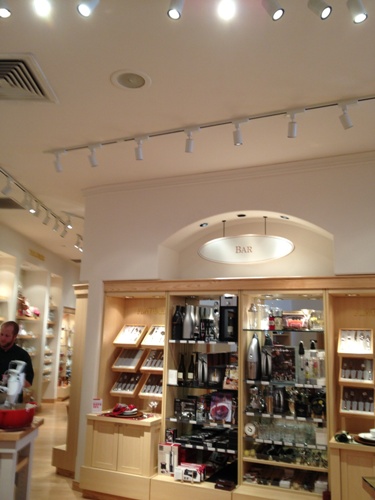
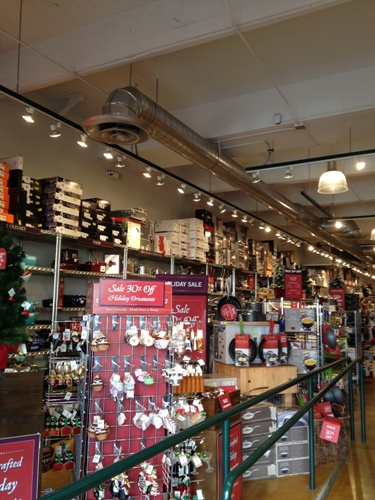
In the world of cookware there are two stores that come to mind most readily—Williams Sonoma and Sur La Table.  Each has a distinct brand personality.  Here is an analysis of the two personalities:

What makes them the same?

1.  They both sell cookware and other items relating to dining. Many well known brand items are sold in both stores.

2.  They both have stores located in shopping malls or highly trafficked streets

In Santa Barbara, both stores are thriving.  Sur La Table is located in our Downtown area, an area frequented by locals and tourists. Williams Sonoma is located in the La Cumbre  Shopping  Center, known to locals and less to tourists.

What makes them different?

Slogans:

“Serving Serious Cooks since 1959” (Williams-Sonoma)

“The Art & Soul of Cooking” (Sur La Table)

Store Décor and Cookware Display


Williams-Sonoma has wide aisles with wood cabinets and wood floors. In many of their stores they have an open kitchen where they are continuously demonstrating cooking techniques and offer food samples to customers.  The merchandise is artfully placed in sections, and those sections are clearly marked.  The look here is traditional and elegant; the energy is calm and relaxed.

Sur La Table has a contemporary industrial look with lots of merchandise arranged on “high-tech” tables.  They demonstrate some products such as coffee machines.  Everywhere you look there are aisles filled from top to bottom with interesting kitchen gadgets and cookware. The energy is fast paced and fun. 

Logos

Williams-Sonoma:  traditional and welcoming.

Sur La Table: casual, fun, relaxed

As a luxury real estate marketing professional, does your brand identity clearly express your personality or the personality of your company?  Does it help to sharply differentiate you from your competition?

WATCH VIDEOS-

Buzz-Worthy Luxury Real Estate Websites 

Personal Branding Case Studies   Company Branding Case Studies 

About Language of Luxury

- JOIN THE LOL COMMUNTIY - 

 GET FLUENT. GET AFFLUENT! 

 Linked In, FacebookActive Rain

Follow Us on Twitter: LuxuryMarketing

Personal & Company Branding: Commanding the Lion's Share

Brand strategy is a concept that is often misunderstood in the realm of marketing luxury real estate.  The reason it is not crystal clear to many agents and brokers is because it only applies to the subject of gaining or sustaining market leadership. The purpose of strategic branding is to achieve “top-of-mind status” which enables you to command the lion’s share of your market. It takes a certain entrepreneurial “gene” to embark on what we call “the unabashed pursuit of market leadership”.  And, it takes strategic thinking to achieve the #1 or the #2 position in the minds of your target market.    

Perhaps the company that is most unabashed about its pursuit of market leadership is Google. With a 63% market share of all searches performed on the internet and a 53% penetration in the smart phone market for its Android operating system, the pursuit of market leadership is something that Google takes very seriously.  

Recently, Google’s Chrome surpassed Firefox as the #2 most widely used browser behind Microsoft’s Internet Explorer (IE).  According to the Wall Street Journal IE's market share is down from 56% to 40%.  Chrome has 25.7% and Firefox has 25.2%. Can you see that brand strategy is irrelevant to Opera, another browser, unless they want to challenge the incumbent market leader or overtake Chrome and Firefox as #2?  

For most consumers, the differences between browsers is negligible. How many consumers could actually tell you the difference between the top three? Yet, one enjoys top-of-mind status over all the rest. It takes a very fine-tuned strategy to win the lion’s share of mind share and thus, market share.

Browsers can be downloaded for free. So what is at stake to be #1? The browser can dictate which search engine the consumer will use and that is where the advertising dollars are made.  Google was a major investor in Firefox and Firefox features Google’s  search engine.  They split the revenue generated by pay-per-click advertising.  Google is also the search engine for Apple’s Safari browser, which is why Google is truly the king of the search jungle.

That Firefox investment was an excellent strategy on Google’s part.  By dominating search on Firefox in addition to Chrome , Google most likely has eclipsed the revenue generated by Microsoft’s Bing search engine featured on  Internet Explorer.

What is at stake for you, as a luxury real estate marketing professional if you were to embark on the unabashed pursuit of market leadership?

WATCH VIDEOS-

Buzz-Worthy Luxury Real Estate Websites 

Personal Branding Case Studies   Company Branding Case Studies 

About Language of Luxury

- JOIN THE LOL COMMUNTIY - 

 GET FLUENT. GET AFFLUENT! 

 Linked In, FacebookActive Rain

Follow Us on Twitter: LuxuryMarketing

Luxury Real Estate Marketing: Truth is in the Details

In luxury real estate marketing, the first impression of your collateral materials, your web site and your messaging should exude luxury.  However, it is the attention to details that solidify the impression and make it eminently clear that you speak the language of luxury fluently.

Truth is in the details.    A diamond in the rough definitely has hints of brilliance.  When it is cut, faceted, and polished that evidence becomes indisputable as the light will shine through it and attest to its beauty.  Each facet is a detail precisely cut to reflect the beauty of the stone.

Details either affirm the luxury or point out that it is an imitation.  Art appraisers look for details to authenticate or dismiss a work of art.  Luxury is attention to details, it is craftsmanship. This is what makes a luxury item valuable.

Alexandra’s maternal grandmother was the head finish seamstress for Coco Chanel.  She was in charge of embroidery, hand stitching button holes, and hems.  Hems had to be invisible to look right. This took time and skill and gave the clothing item one of the details of luxury.    

When dealing with a luxury clientele you need to be well versed in the details of luxury.   Educating yourself on every aspect of what makes a luxury home is key to your success.  It is the very thing that will inspire confidence in your clients and will assure them that they have made the right choice.

WATCH VIDEOS-

Buzz-Worthy Luxury Real Estate Websites 

Personal Branding Case Studies   Company Branding Case Studies 

About Language of Luxury

- JOIN THE LOL COMMUNTIY - 

 GET FLUENT. GET AFFLUENT! 

 Linked In, FacebookActive Rain

Follow Us on Twitter: LuxuryMarketing

 

Luxury Real Estate Brand Strategy: The Unabashed Pursuit of Market Leadership

 Singapore Airport  Courtesy of Salvador Manaois Iii

If you have that entrepreneurial “gene” that compels you to be the best in class as a luxury real estate marketing professional then you can understand our slogan, “the unabashed pursuit of market leadership”. For, it is only within the context of market leadership that brand strategy has any meaning.

Brand strategy is the route to “top-of-mind status” in any category of business whether it is a product or service.  What most luxury real estate marketing professionals do realize (because it may not be obvious) is just how much is at stake when your name or your company name vs. your competitor’s name comes to mind first to the majority of people in your marketplace or niche therein.   What is at stake is the lion’s share of business. It is known as “mind share”. And, mind share converts to market share over time. Whoever has the most mind share wins, big time!

When you are ready to approach your luxury real estate marketing practice as an exercise in achieving top- of- mind status the entire “game board” or competitive field takes on an entirely new perspective. The very set of questions that you need to ask yourself is completely different than the questions that the majority of agents or brokers in your marketplace ask themselves. In fact, the questions required to achieve this status most likely do not even enter their minds. 

The most important question to ask yourself if you decide to embark on the unabashed pursuit of market leadership is this:  What can I (or we, as a team or company) do better than anyone else in the world (or in my marketplace)?  To illustrate the importance of this question see how it played out when an entire country asked this question of itself and implement the answer.

Singapore’s Changi airport has been recognized as the best airport in the world winning over 370 ‘best’ awards worldwide.  Their airport offers countless amenities to travelers who have deliberately chosen it as their connection hub to other parts of the planet.  At Changi airport you can take a shower for $6.  You can go swimming in the airport pool for $11.  There are touch screens next to the sinks in the restrooms where you can rate your experience or get an immediate response if there is an issue.

Soothing music is piped in to reduce stress throughout the airport. There is over 750,000 square feet of shopping, concessions and entertainment facilities. 50% of revenues pays for amenities and also keeps costs down for the airlines.  There are activities galore for travelers with time on their hands including movies and bus tours of the city if you have 5 hours in between flights. 

Some travelers appreciate the quick baggage handling. Others find terrific entertainment for their kids who can be challenging to deal with on long flights plus stopovers. And, there are people who choose Singapore just because they can swim in between flights!

Ultimately, Singapore has created an international buzz-worthy news story by identifying what the country can do better than anyone else in the world and delivering on that claim. In the unabashed pursuit of market leadership Singapore not only generates over $1 billion dollars in annual revenue from its airport, it has proven that the economic development  of an entire country can benefit by becoming known as the best in class in a specific market niche.

Oddly, the cost of adding most of these amenities is relatively low.  Other airports could easily imitate this strategy. However, just like with the tablet computer, first to market earns instant top-of-mind status in an underserved or uncontested market niche rendering others simply as “me too” copycats. This is the power of great brand strategy!

What can you do better than anyone else in your luxury real estate marketplace?  Is it time you became known for doing that and triggering positive buzz about you or company?

WATCH VIDEOS-

Buzz-Worthy Luxury Real Estate Websites 

Personal Branding Case Studies   Company Branding Case Studies 

About Language of Luxury

- JOIN THE LOL COMMUNTIY - 

 GET FLUENT. GET AFFLUENT! 

 Linked In, FacebookActive Rain

Follow Us on Twitter: LuxuryMarketing
Luxury Real Estate Marketing: You Can Have Your Cake and Eat it Too!


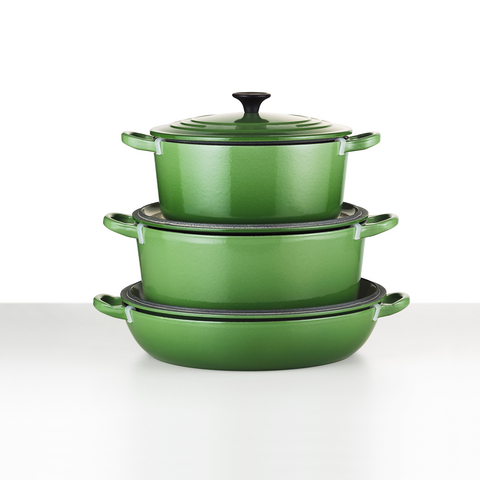
Outstanding packaging is an important way to express your superior level of attention to detail. For many high net worth individuals this a an indication of the level of quality service they can expect when they do business with you as a luxury real estate marketing professional.

In the arena of competition for market leadership the differences between the #1 and #2 competitor is sometimes marginal in terms of volume of business.  Each one claims they have the most in-depth market knowledge, that they have integrity, the best negotiation skills and that they offer excellent service.  If they both essentially have the same set of benefits, including their companies’ benefits, on what basis does the consumer make his or her choice to begin a new business relationship given that  a referral was not the basis of the introduction?

You have heard the expression, “you cannot judge a book by its cover”. But, more often than you realize packaging is the basis of choice for consumers who are not introduced to a product or service by a trusted recommendation. Many consumers select their wines based solely on the aesthetics of the label and the cleverness of the name, i.e., the packaging.

That is why some wineries pay as much as $80,000 just for a label design.  In Napa Valley, there are many fine wines of the same varietal priced similarly. In fact, in a blind taste test,  they are difficult to tell apart except for those who have the most educated palates.  Which one should the uninformed consumer buy?

Aesthetics play a very big role in romancing consumers to purchase a product or to do business with a service professional.  Here is an example of how this plays out.

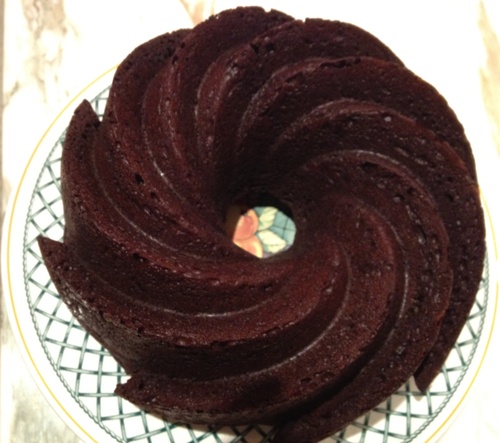
Most of us love chocolate cake.  Get the idea that two bakers use the finest fresh organic ingredients to create a great chocolate cake batter.  They use the exact same recipe and the same oven, at the same time to bake their cakes. In a blind taste test, consumers cannot tell the difference between the two. 

But, following this example, one baker used an inexpensive bundt pan and the other used a top-of-the-line pinwheel designed pan that clearly made her cake stand out visually from the ordinary shaped caked.  This detail that only cost 1/3 more created a superior presentation that also sparked word-of-mouth advertising because it literally was “remarkable”.

In marketing luxury real estate pay attention to the details in your presentation of your personal brand and also in the properties you represent. That alone can tip the scales in your favor to win more clients and out-perform your closest competitor.  This goes to show that you can have your cake and eat it too!

WATCH VIDEOS-

Buzz-Worthy Luxury Real Estate Websites 

Personal Branding Case Studies   Company Branding Case Studies 

About Language of Luxury

- JOIN THE LOL COMMUNTIY - 

 GET FLUENT. GET AFFLUENT! 

 Linked In, FacebookActive Rain

Follow Us on Twitter: LuxuryMarketing
Personal & Company Branding: Co-Branding, Italian Style with Sparkle

Co-branding is a marketing arrangement between one or more brands. The idea is to act in cooperation in a way that combines the strength of the brands. It is also a way to differentiate products and services in a highly competitive marketplace.  It is an excellent strategy that is underutilized by luxury real estate marketing professionals.

At lunch we ordered one of our favorite sparkling waters, San Pellegrino from Italy.  As we were waiting for our order, we noticed that the bottle had a new label and featured Bulgari one of Italy’s premier jewelers.  The label as seen above has a photo of a beautiful Bulgari necklace and the caption reads “Pellegrino Sparkles with Bulgari.”

This special edition bottle was conceived by both companies to promote the Italian style internationally, and according to Stefano Agostini, the CEO of San Pellegrino, “Our brand is an international symbol of the Italian art of living and partnering with Bulgari adds power to our efforts to export the finest side of Italy.”

This is the second limited edition series that S.Pellegrino has launched to celebrate Italian Style.  The first was with famous Italian clothing designer Missoni, who created four different versions of their signature patchwork chevron design combined with the San Pellegrino brand.

For both firms this is a win-win situation.  They came together to promote the Italian lifestyle, and their great luxury brands that have become international Italian icons. This co-branding endeavor promotes their commitment to their country, and also leverages their marketing dollars, which can potentially increase their overall market share.

How can you co brand with luxury services and products and do the same for your luxury marketplace?

WATCH VIDEOS-

Buzz-Worthy Luxury Real Estate Websites 

Personal Branding Case Studies   Company Branding Case Studies 

About Language of Luxury

- JOIN THE LOL COMMUNTIY - 

 GET FLUENT. GET AFFLUENT! 

 Linked In, FacebookActive Rain

Follow Us on Twitter: LuxuryMarketing
Luxury Real Estate Personal & Company Branding: All You Need Is Love & Chocolate!

“All You Need is Love”-- Lennon-McCartney

 “All you need is love. But a little chocolate now and then doesn't hurt--Charles M. Schultz, Creator of “Peanuts”

As a luxury real estate marketing professional, emotional branding can sharply differentiate you from your competitors.  First you need to romanticize your marketplace.  Then, you need to create the perfect personal branding message so that potential clients experience “love at first sight” or on their first encounter with you.

People like to do business with people they trust. Excellent branding is all about accelerating the speed of trust.  The faster you can attract and convert potential clients into and an ever-increasing base of raving fans the more money you will make through referrals.

Emotions compel people to act faster than logic. That is why emotional branding is so important.  Luxury real estate marketing professionals who are passionate about their marketplace and their job have a greater chance of attracting more clients.  Passionate people are like natural magnets.  They draw like-minded people toward themselves.   If you can capture that passion in your branding and on your website your website can become a silent salesperson for you. 

Think of branding like packaging.  People who do not know a product will more than likely buy the product based on its packaging.  This is true of books, of wine labels and believe it or not, it is true when it comes to selecting a real estate agent.  Prospects searching for homes on the web from outside of your geographic area do not know one agent from another. Agents’ websites are basically seen as a commodity.  You usually can get the same basic information on any half-way decent agent website. In this scenario, you have a nano-second to make a first impression, to stand out and engage your prospect.

Today there is a glut of wine on the market.  Competition is extremely stiff in this industry. As a consumer, if you are not a connoisseur how can you tell one from the other?  Fine chocolate has also become commoditized.  Chocolate growers have followed in the footsteps of wine growers creating appellations for differentiation purposes, based on the “terroir” or earth in which it is grown.

But, when it comes to the point of sale, how does a consumer who is not a connoisseur know one brand from the other?  Trader Joe's markets has built a brand that commands a very high level of trust among its loyal customers. When they put their brand name on a product it usually is worth at least a try.

Trader Joe's understands the value of emotional branding.  They did not just call their dark chocolate bar “Trader Joe’s Chocolate”.  They named it, “The Dark Chocolate Lovers' Bar”.  For the connoisseur they also added this to their packaging: “smooth & fruity from the Tumaco Region of Columbia." The chocolate connoisseur may appreciate these “chocolate notes” (like wine descriptions), recognize this appellation and make a buying decision based on logic.  But, average consumers (we are talking about the masses now) who love dark chocolate will grab the package for the first time just based on the name and the festive South American graphic design.  

When you are reaching for market leadership your branding must appeal both to logic and to emotions.  But, you will find that emotions are the fastest way to the heart of the majority of new prospects when they are in the process of selecting a agent to represent them.

PS. One of our favorite brands is Valhona pictured above with the purple arrow made from the finest African chocolate.  As unabashed chocolate lovers and self appointed experts of dark chocolate, we also tried TJ's Dark Chocolate Lover's Bar and enjoyed the "fruity taste." Now we have added another favorite to our list. We  educated our palate in the process but that was secondary. -Ron & Alexandra Seigel 

WATCH VIDEOS-

Buzz-Worthy Luxury Real Estate Websites 

Personal Branding Case Studies   Company Branding Case Studies 

About Language of Luxury

- JOIN THE LOL COMMUNTIY - 

 GET FLUENT. GET AFFLUENT! 

 Linked In, FacebookActive Rain

Follow Us on Twitter: LuxuryMarketing